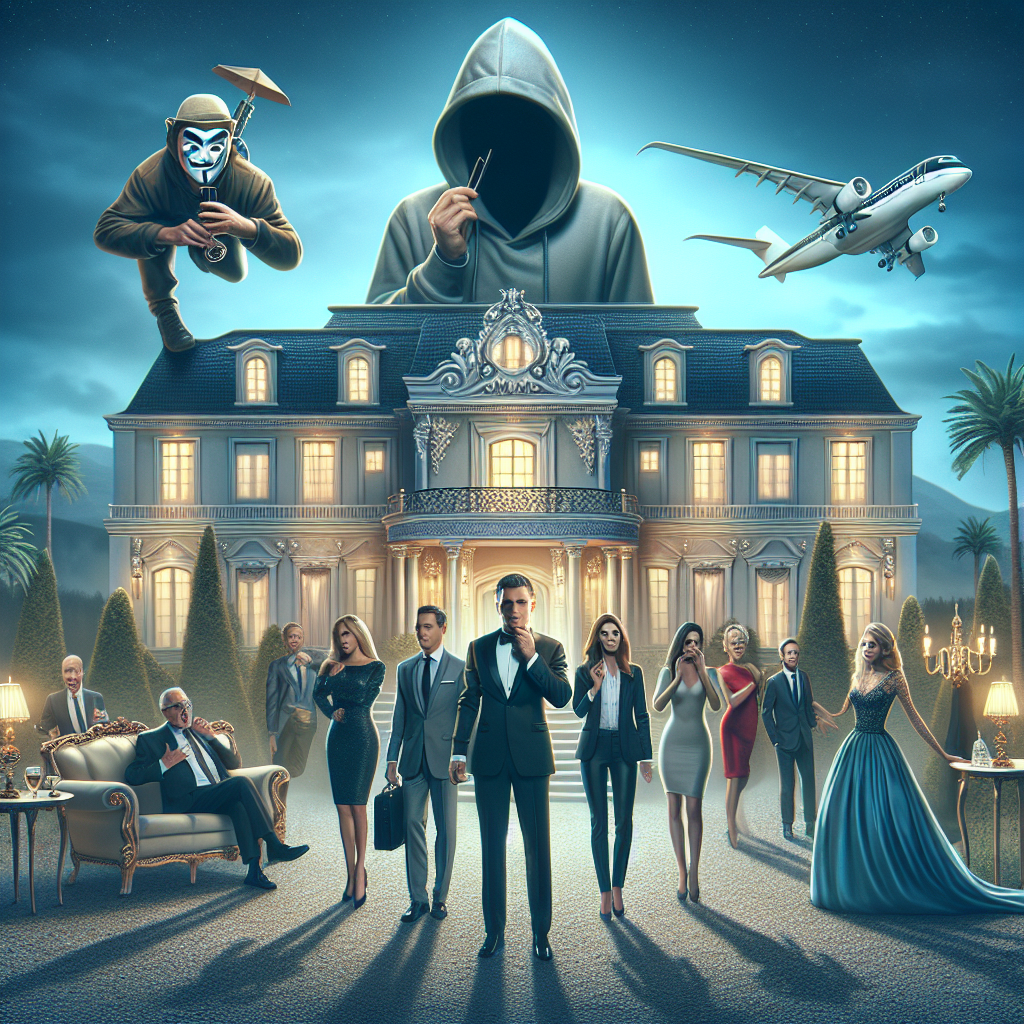

Once upon a reality TV nightmare, an unwitting group of women found themselves on a surreal quest to win the heart of a doppelgänger masquerading as Prince Harry. "I Wanna Marry 'Harry'" aired on Fox in 2014 and was set against the confusing backdrop of reality TV's endless quest for love. The show took place in an English countryside mansion and presented an absurdly regal facade. The premise was simple yet preposterous: a group of American women competed for the affections of a man they believed was Prince Harry, played by an earnest look-alike named Matthew Hicks. While the show promised fairy tale romance wrapped in royal pretenses, it delivered a different sort of spectacle.
In the kaleidoscope world of reality TV, deception is the ultimate currency. But "I Wanna Marry 'Harry'" pushed the boundaries of impersonation to a wholly theatrical level. The show immersed its contestants in an elaborate illusion, complete with fake servants and grand balls, all while Hicks donned a decent, but not amazing, royal accent. This charade sparked ethical concerns about the expectations placed on reality TV participants. Should viewers empathize with these women, or critique them for missing the obvious signs? Some viewers found the show entertainingly absurd, while others saw it as a cruel joke on the contestants’ sincerity and dreams.
The ethical debate surrounding reality TV's manipulation of reality becomes even more complex when considering the socio-political context. The idea of using a famous figure's identity, without consent, raises questions about privacy and caricature. Reality TV thrives on blurring lines, but this show danced on the edge of what some might consider identity theft. This concept was like a social experiment satirizing the obsession with celebrity culture and royalty. Yet, it also forced us to reflect on the societal infatuations that allow such shows to exist. Does this fantasy fulfill a cultural craving for fairy tales, or does it exploit those willing to believe in the fantasy?
Examining "I Wanna Marry 'Harry'" through a politically liberal lens exposes the stark disparities embedded in access to such fantasies. The show’s producers banked on the contestants' naivety and perhaps blind ambition but also highlighted cultural stereotypes. The dream of thrusting one's life into royalty is tinged with classism, showcasing a paradigm where fairy tales seem attainable only for those in certain social strata. This dynamic becomes fodder for critiques on how media perpetuates class division and insecurity.
Fascinatingly, the audience's reactions to "I Wanna Marry 'Harry'" also revealed broader truths about media consumption. Gen Z, particularly adept at spotting inauthenticity, was likely to see through the farce. The show trusted in the audience’s complicity, inviting skepticism as much as it demanded suspension of disbelief. The laughter at the show might have been tinged with incredulity or even discomfort, as much as with genuine amusement.
Critics of "I Wanna Marry 'Harry'" might argue it was harmful or frivolous, detracting from important societal issues. Shows like this often come under fire for creating an environment where deception and manipulation masquerade as entertainment. Yet, one might defend it as a harmless escape from reality, a space to question cultural norms humorously, albeit awkwardly. Despite its controversies, it served as a reminder of reality TV's capacity to reflect societal priorities, even when such reflections disturb.
Reflecting on this reality TV escapade, one can wonder how such a concept ever made it to television screens. The show’s reception was mixed: some found it ridiculous yet mildly entertaining, while others deemed it downright insulting. It’s a thought-provoking reminder of how easy it is for television's creators to construct dreams that viewers might buy into, albeit briefly. The preposterousness of "I Wanna Marry 'Harry'" might seem extreme, but it taps into a persistent fascination with royalty that transcends time, reflecting our culture's love-hate relationship with celebrity and status.
Ultimately, "I Wanna Marry 'Harry'" provides a bizarre snapshot of cultural values, ambition, and the human desire for enthralling narratives. As Gen Z continues to shape media landscapes, one might anticipate how future television shows will confront or play into prevailing cultural fantasies.